

Highlight in NSCLCRadioresistanceand Lipid Droplet Accumulation
Recently, a research team led by Professor Guangming Zhou and Professor Hailong Pei from the Center for Radiobiology Research, School of Radiation Medicine and Protection at Soochow University, has published a research paper titled “ATMLP Enhances Radioresistance in Non-Small Cell Lung Cancer through AKT-Mediated Lipid Droplet Accumulation” in the International Journal of Biological Sciences (Int. J. Biol. Sci. 2026; 22(4): 1852-1867. doi: 10.7150/ijbs.116401).
ATMLP is a mitochondrial-localized micropeptide encoded by the long non-coding RNA AFAP1-AS1. This study uncovers a previously unrecognized role of ATMLP in promoting radioresistance of non-small cell lung cancer (NSCLC). The team found that ATMLP is highly expressed in NSCLC tissues, and that ionizing radiation further induces ATMLP expression. ATMLP overexpression profoundly reprograms cellular lipid metabolism and promotes intracellular lipid droplet (LD) accumulation, whereas ATMLP knockout reduces LD content and markedly increases the radiosensitivity of NSCLC cells. Supplementation with oleic acid/palmitic acid partially rescues the radiosensitivity of ATMLP-deficient cells, confirming the pivotal role of LD dynamics in the radiation response. Based on these findings, the team proposes a working model in which radiation-induced ATMLP relieves ROS-mediated suppression of AKT signaling, promotes lipid droplet accumulation, and drives clonal selection toward stable radioresistance. These findings identify ATMLP as a key mediator linking ROS homeostasis and lipid metabolic reprogramming to the radiation response, and suggest that targeting the ATMLP–ROS–AKT–LD axis may represent a promising therapeutic strategy to enhance radiotherapy efficacy in NSCLC.
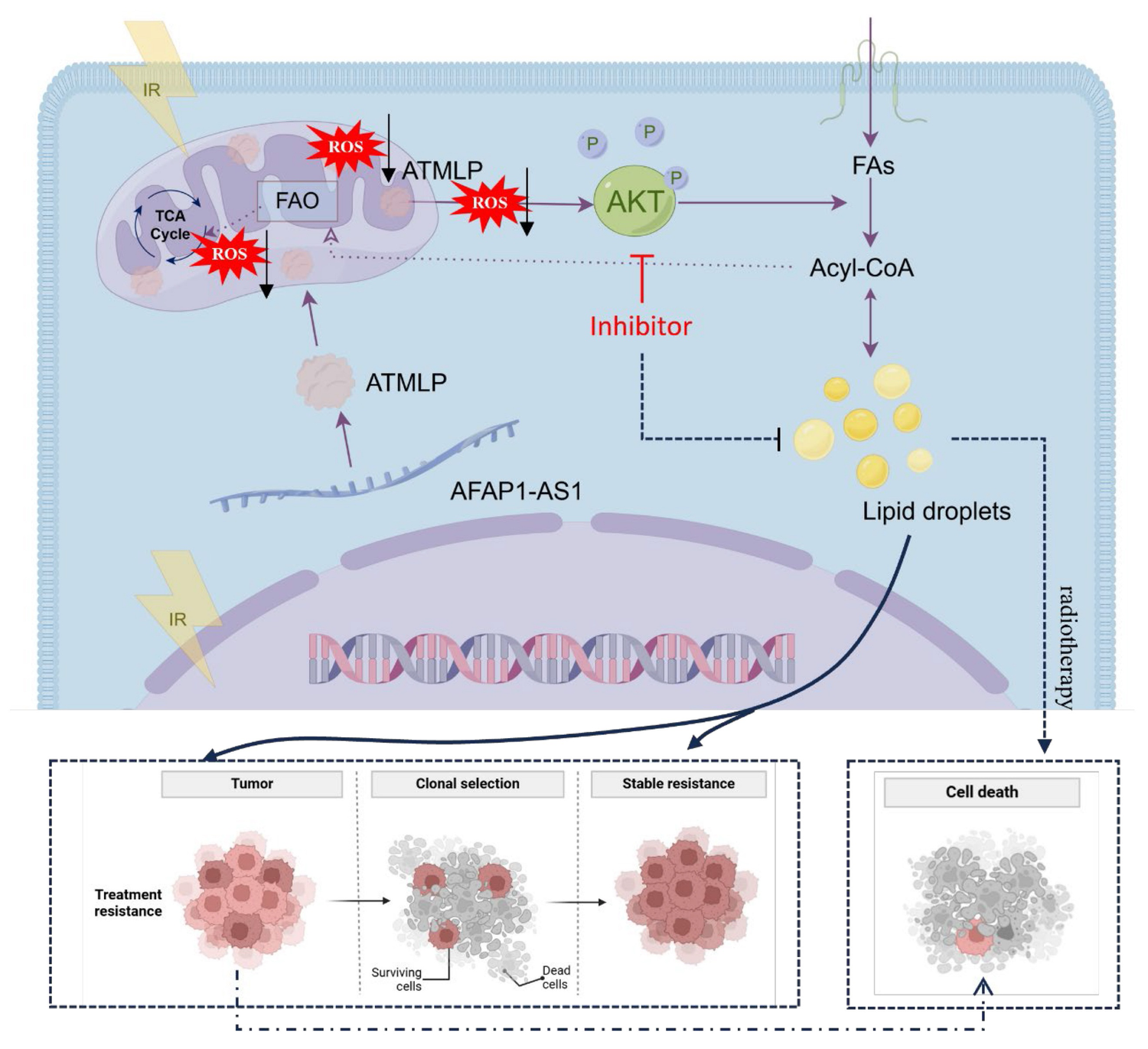
Figure 8. Working model for ATMLP function in NSCLC radioresistance.
The first authors of this study are Yingchu Dai (Affiliated Hospital of Jiangnan University), Wanyi Wu (Ph.D. student at the School of Radiation Medicine and Protection, Soochow University), and Tingyu Jiao (China Institute of Atomic Energy). The corresponding authors are Professor Guangming Zhou and Professor Hailong Pei from the School of Radiation Medicine and Protection, Soochow University.